


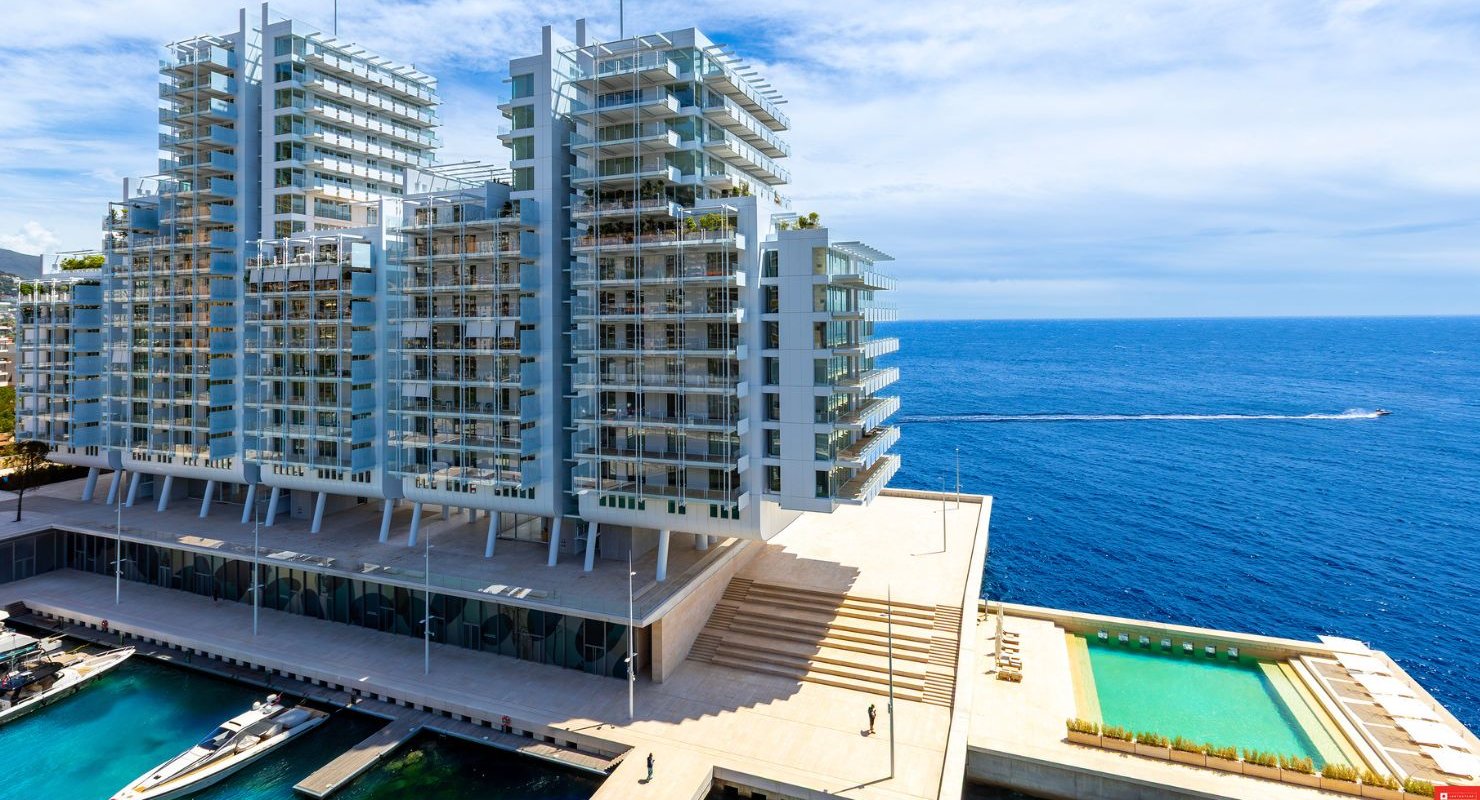
Sustainable Luxury Real Estate in Monaco
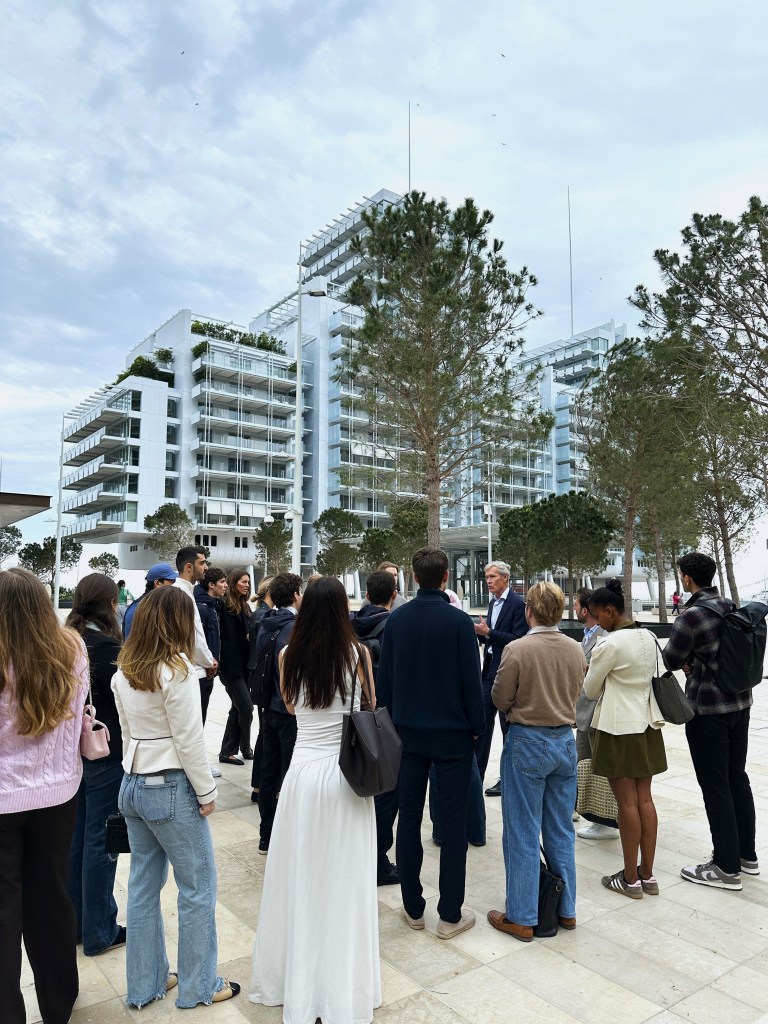
Students from the MSc in International Management with specialization in Real Estate had the opportunity to visit Mareterra, Monaco’s newest waterfront district, accompanied by Benjamin Franco (Real Estate Sales Associate at Douglas Elliman Real Estate). The project was presented on site by Régis Adeline (Directeur général chez SAM Anse du Portier).
A project born from ambition and constraint
The Mareterra project was launched in 2015 under the initiative of Prince Albert II of Monaco, following a competitive selection process won by the consortium in charge of its development. The objective was highly ambitious: to create a completely new eco-responsible district on the sea, in a country where land availability is extremely limited.
Construction officially began in 2017 and was completed in 2024, marking nearly a decade of engineering, planning, and execution. The project represents an investment of approximately €2 billion, reflecting the scale and complexity of building a new district entirely on reclaimed land.
Engineering a district on the sea
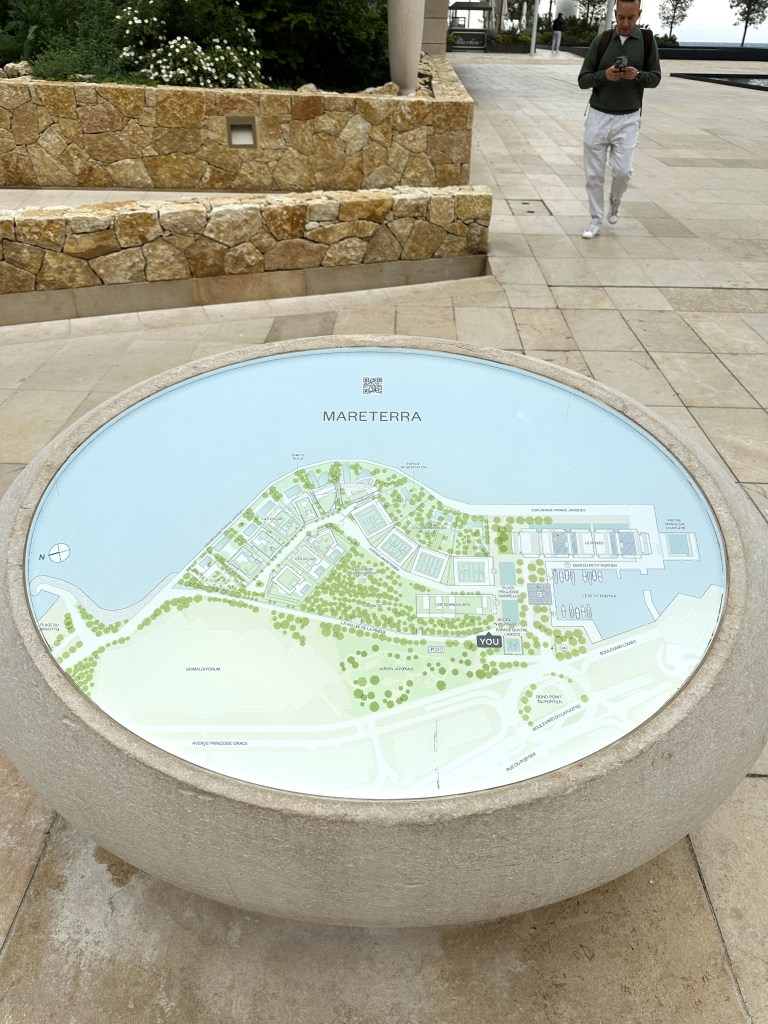
Mareterra covers approximately 6 hectares of land reclaimed from the sea, making it one of the most ambitious coastal development projects in Europe. The creation of the artificial land extension was a highly complex engineering phase involving several years of marine construction and ground stabilization work.
Architecture and urban design
The district includes a mix of residential, cultural, and public spaces designed by internationally renowned architects, including Renzo Piano, who designed two residential buildings comprising 49 apartments and 10 private villas.
Housing units are characterized by large surfaces, with apartments starting from 300 m², reflecting Monaco’s demand for high-end family residences. Mareterra also includes what is considered the most expensive apartment in the world.
In addition to private residences, the development integrates underground parking facilities, public parks, landscaped areas, and an extension of the Grimaldi Forum, reinforcing its role as a multifunctional urban district.
Sustainability and environmental integration
A central aspect of the project was environmental protection and biodiversity preservation. Despite being a land reclamation development, Mareterra was designed to minimize ecological impact and support both marine and terrestrial ecosystems.
Key environmental measures include the preservation and monitoring of seagrass beds, including the transplantation of approximately 400 m² of seagrass to Larvotto Beach, as presented during the project visit, alongside the creation of artificial marine habitats to support local biodiversity.
The landscaping strategy integrates extensive green areas and ecological corridors throughout the district, including the planting of approximately 800 trees and a wide variety of plant species, contributing to the overall ecological continuity of the site.
In addition, the project incorporates spaces designed for well-being and interaction with nature, reinforcing a broader vision of sustainability that connects architecture, landscape design, and environmental awareness.
Educational value of the visit
The visit to Mareterra offered our International Management students a rare opportunity to experience a landmark development from the inside.
More than a site visit, it functioned as a live case study where theory met reality. Students witnessed firsthand how ambitious real estate projects take shape through the interplay of political vision, complex financial structuring, and cutting-edge technical execution.
A key takeaway was the central role of stakeholder management. In a context defined by strict environmental regulations and significant financial stakes, students observed how coordination between public authorities, private investors, and technical experts becomes critical to a project’s success.
Mareterra also provided a powerful illustration of how sustainability is no longer a constraint but a driver of value in luxury real estate. From marine ecosystem preservation to habitat reconstruction, students explored concrete environmental strategies typically confined to academic discussions.
The exchange with industry professionals, including Régis Adeline, further enriched the experience by offering an insider perspective on decision-making processes and the operational challenges behind iconic developments.
Overall, the visit strengthened students’ ability to critically assess large-scale international projects, equipping them with a deeper understanding of the delicate balance between innovation, sustainability, and economic performance. It also reflects IUM’s commitment to experiential learning, where academic insight is continuously enhanced through direct engagement with industry realities.
For more information about our Master in International Management, check our website
If you have any questions, contact the admissions team at admissions@monaco.edu
Last update on