


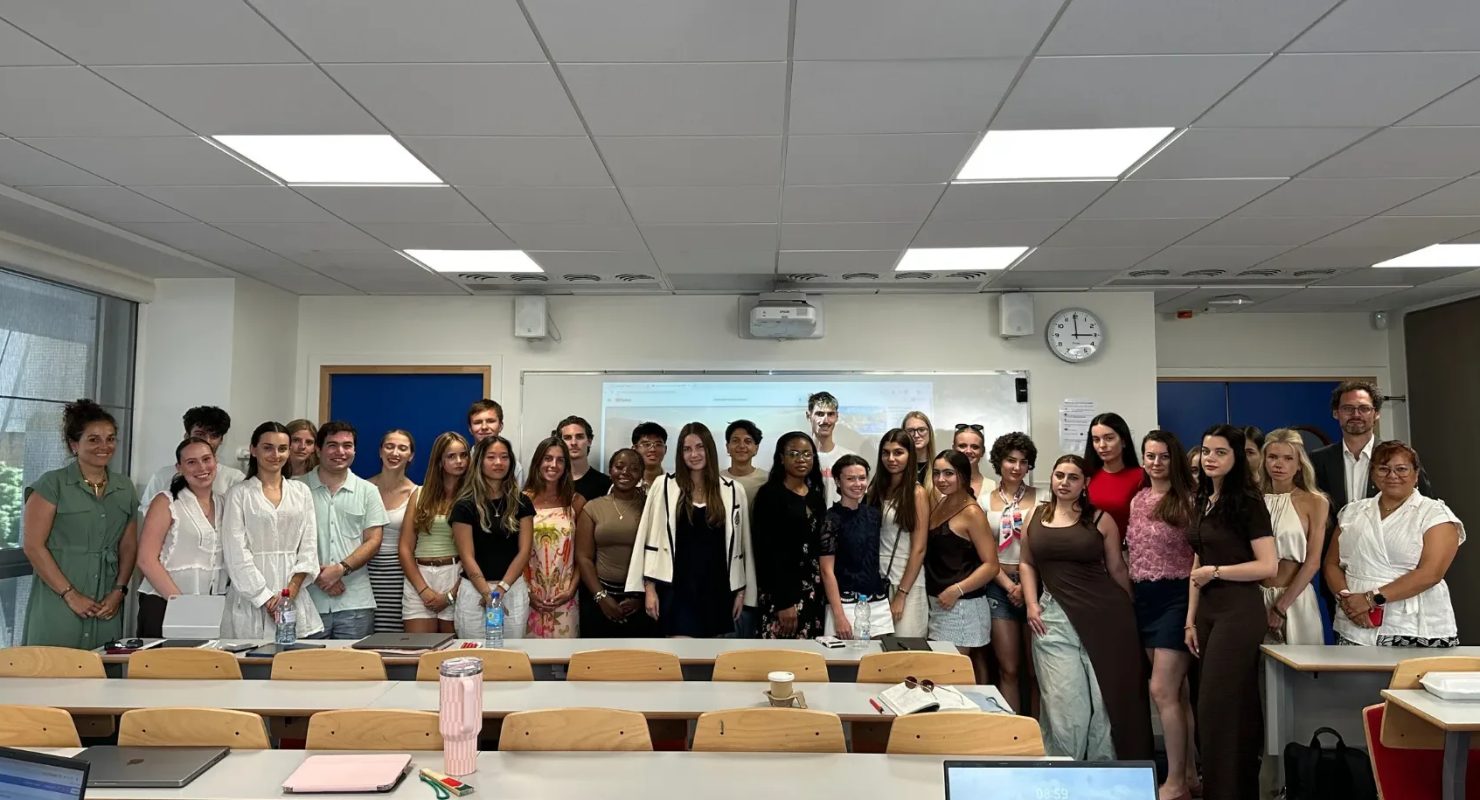
A Unique Learning Opportunity at IUM
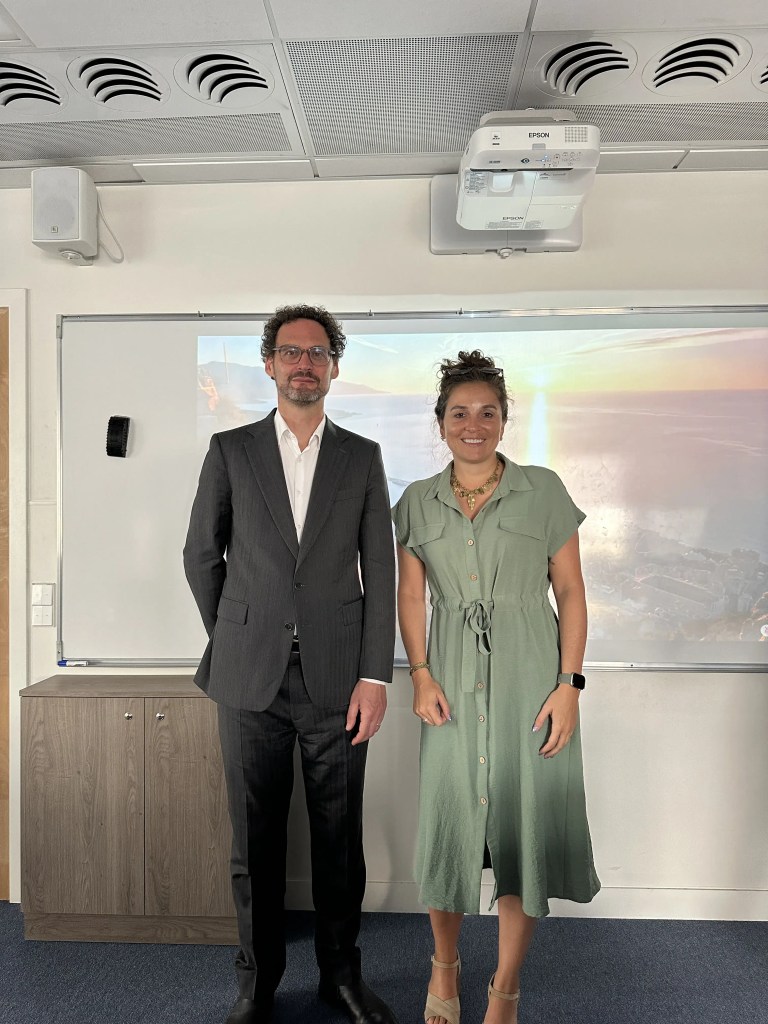
One of the greatest strengths of the IUM Summer School is the opportunity to engage directly with industry leaders and gain first-hand insights into the realities of global business. This week, participants had the privilege of attending a guest lecture delivered by Guy Antognelli, Director of the Monaco Government Tourist and Convention Authority, accompanied by Amélia Pellero, Head of Marketing at Visit Monaco.
Through his presentation, Antognelli offered a behind-the-scenes perspective on how one of the world’s most recognizable destinations is promoted internationally. Drawing on Monaco’s experience, he explored the strategic choices involved in destination branding, visitor engagement, and international tourism development. The session concluded with an engaging Q&A discussion, during which both speakers shared additional perspectives on communication, marketing, and emerging trends in the tourism sector.
Defining Monaco’s Tourism Identity
The lecture began with an overview of the key pillars that support Monaco’s tourism strategy: safety and security, luxury hospitality, culture, innovation and sustainability, and business tourism.
These pillars reflect the multifaceted identity that Monaco seeks to communicate internationally. While the Principality is widely recognized for iconic elements such as the Casino de Monte-Carlo, luxury hotels, prestigious events, and exceptional cars, its tourism strategy aims to go beyond these symbols by highlighting a broader and more diverse experience.
A central point of the discussion was the balance between Monaco’s internationally recognized image and the different dimensions that contribute to its identity as a destination.
Heritage and Innovation: preserving Monaco’s DNA
A central theme of the lecture was the unique identity of Monaco. Antognelli explained that, despite its small geographical size, Monaco is a sovereign country with a global reputation and an exceptionally diverse tourism offering.
Visitors often associate the Principality with iconic symbols such as the Casino de Monte-Carlo, luxury hotels, prestigious events, and supercars. These elements undoubtedly contribute to Monaco’s image, but they represent only part of the story. The challenge for tourism professionals is to ensure that visitors’ expectations are met while also showcasing the richness and diversity of the destination.
One of Monaco’s greatest strengths is its ability to offer a wide range of experiences within a very compact territory. Luxury hospitality, cultural attractions, gastronomy, business events, and Mediterranean lifestyle coexist in a way that is difficult to replicate elsewhere.
Adapting the Message to Global Audiences
Another important topic was the need to adapt communication strategies according to different international markets.
Tourists from different countries have different expectations, motivations, and perceptions of Monaco. For this reason, the tourism authority tailors its messaging to resonate with specific audiences while maintaining a consistent brand identity.
The speakers also highlighted that the success of a destination cannot be attributed to a single actor alone. A tourism authority can promote and strengthen a destination’s image, but the overall experience and reputation of a place are the result of the collective contribution of all the professionals and stakeholders involved in the tourism ecosystem, from hospitality providers to cultural institutions and local businesses.
They also addressed an important misconception that Visit Monaco seeks to overcome: the idea that Monaco is exclusively reserved for billionaires. While luxury remains an essential component of its identity, the destination aims to communicate that Monaco is accessible and offers experiences for a much broader audience.
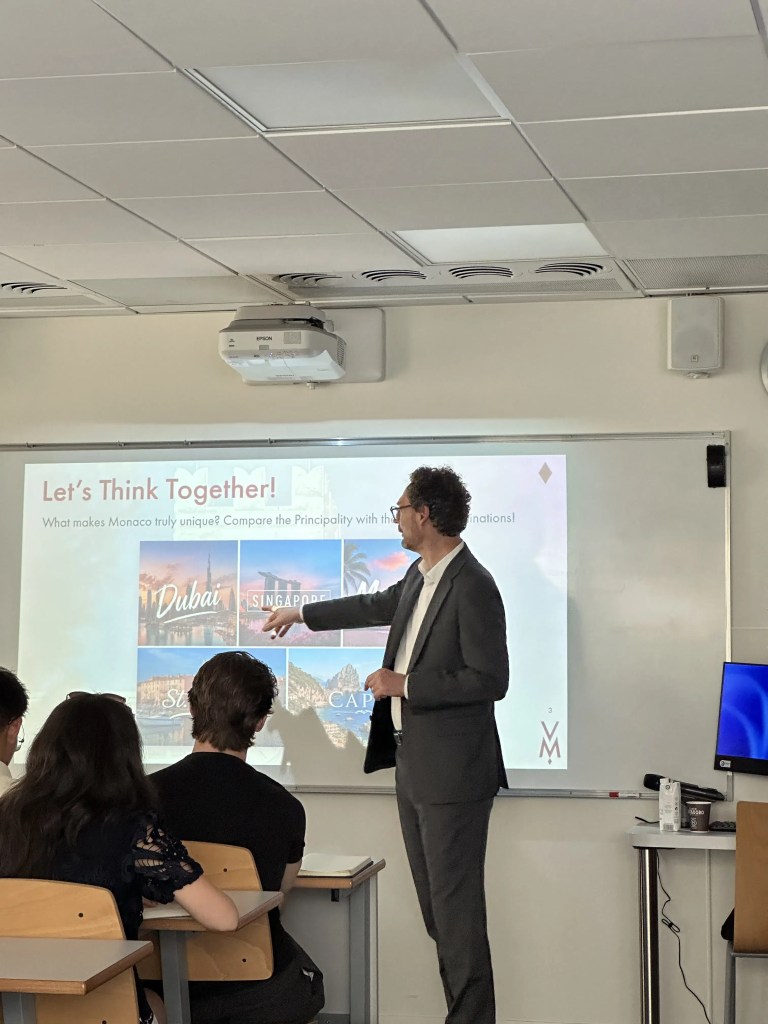
The Growing Importance of Digital Marketing
Digital communication represents an increasingly important component of Monaco’s tourism strategy. During the lecture, Antognelli highlighted the reach achieved by Visit Monaco’s promotional activities, noting that the destination reached more than 34 million people across its platforms in 2025.
He also emphasized the value of strategic partnerships with leading luxury travel networks such as Virtuoso, which contribute to strengthening Monaco’s visibility among international travelers and reinforcing its position within the luxury tourism market.
During the Q&A session, participants had the opportunity to discuss emerging trends in tourism promotion, including the role of artificial intelligence. While AI is attracting growing attention across the industry, its use within Monaco’s tourism institutions remains relatively limited due to governmental regulations.
Looking Behind the Scenes of a Global Destination
Beyond the marketing strategies and performance indicators, the lecture provided a valuable opportunity to understand the complexity of promoting a destination as distinctive as Monaco.
The session revealed how destination branding involves much more than advertising attractions. It requires balancing heritage and innovation, managing international perceptions, adapting messages to diverse audiences, and continuously reinforcing a clear and authentic identity.
For Summer School participants, this was a rare opportunity to gain insight into the dynamics of tourism promotion at a national level and to learn directly from the professionals responsible for shaping Monaco’s global image.
More broadly, the experience perfectly reflects the value of the IUM Summer School: connecting students with leading industry experts and providing access to real-world perspectives that bring classroom concepts to life.
For more information about our Summer School check our website
If you have any questions, contact the admissions team at admissions@monaco.edu
Last update on