


Inside Monaco’s Innovation Ecosystem
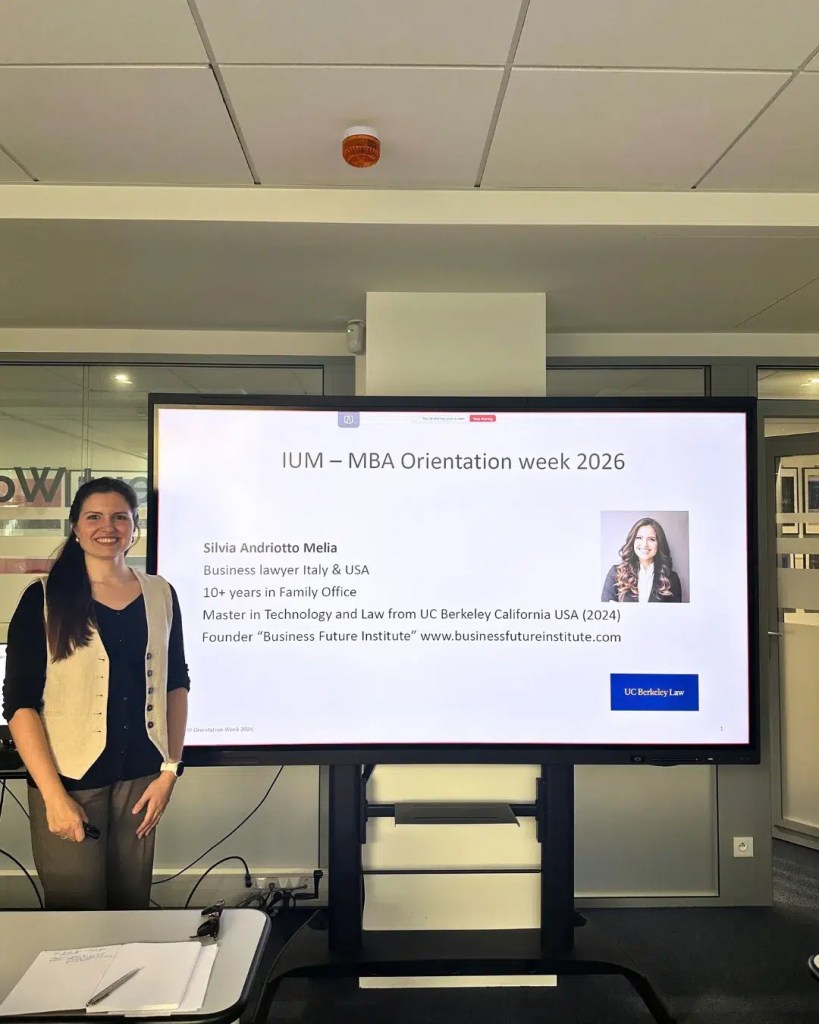
As part of the MBA Residential Week at the International University of Monaco, MBA candidates welcomed Silvia Andriotto Melia, international business lawyer and Founder of Business Future Institute, for a guest lecture exploring the intersection of private wealth, capital and emerging technology.
The session, “Monaco’s Innovation Ecosystem: Matching Capital and Technology to Bring Innovation,” explored how capital can support innovation, how technology is reshaping business, and why human judgement remains essential in an increasingly AI-driven economy.
At IUM, guest lectures are an important part of the MBA learning experience, giving students the opportunity to engage directly with professionals whose work connects academic concepts to current business challenges. Andriotto Melia’s session offered precisely this perspective, moving from the structure of private wealth and family offices to innovation, artificial intelligence and the regulatory questions surrounding emerging technologies.
Understanding Private Wealth and Family Offices
The session began by exploring the world of private wealth and the role of family offices.
Managing substantial family wealth can involve a wide range of financial, legal and strategic considerations, particularly when assets and interests extend across different markets and generations. Family offices provide a dedicated structure through which these different aspects can be managed in a coordinated way, supporting families in areas such as investment management, governance, succession planning and the administration of their wealth and long-term interests.
The discussion then turned to why Monaco has become an important environment for private wealth and family office activity. The Principality brings together an international community of high-net-worth individuals, financial and professional services, and a business environment closely connected to global markets.
From there, Silvia introduced the relationship between capital and innovation, exploring how access to capital and technological development can come together to support innovation. This provided a natural transition from the world of private wealth to the broader question of how innovation is financed, developed and implemented in today’s economy.
From Invention to Innovation
The second part of the lecture focused on a fundamental distinction: invention is not the same as innovation.
An invention involves creating something new, whether a concept, technology or discovery. Innovation goes a step further: it is about successfully implementing an idea in a way that creates practical and economic value.
This distinction led to a broader discussion about why innovation matters for businesses and the wider economy. Innovation can open up new revenue streams through products, services and business models, while helping companies differentiate themselves in increasingly competitive markets. It can also improve efficiency by streamlining operations and automating tasks, while strengthening resilience by helping organisations respond to market shifts, changing consumer behaviours and unexpected disruptions.
The impact of innovation extends beyond individual businesses. Advances in technology and healthcare, together with improvements in productivity, can contribute to broader economic development and shape the way people live and work.
Artificial Intelligence and the Human Role in Business
Artificial Intelligence provided another key focus of the session. From its early development to its growing presence in everyday life, AI has moved from a specialised field of research to a technology increasingly embedded in how people work, communicate, access financial services and make decisions.
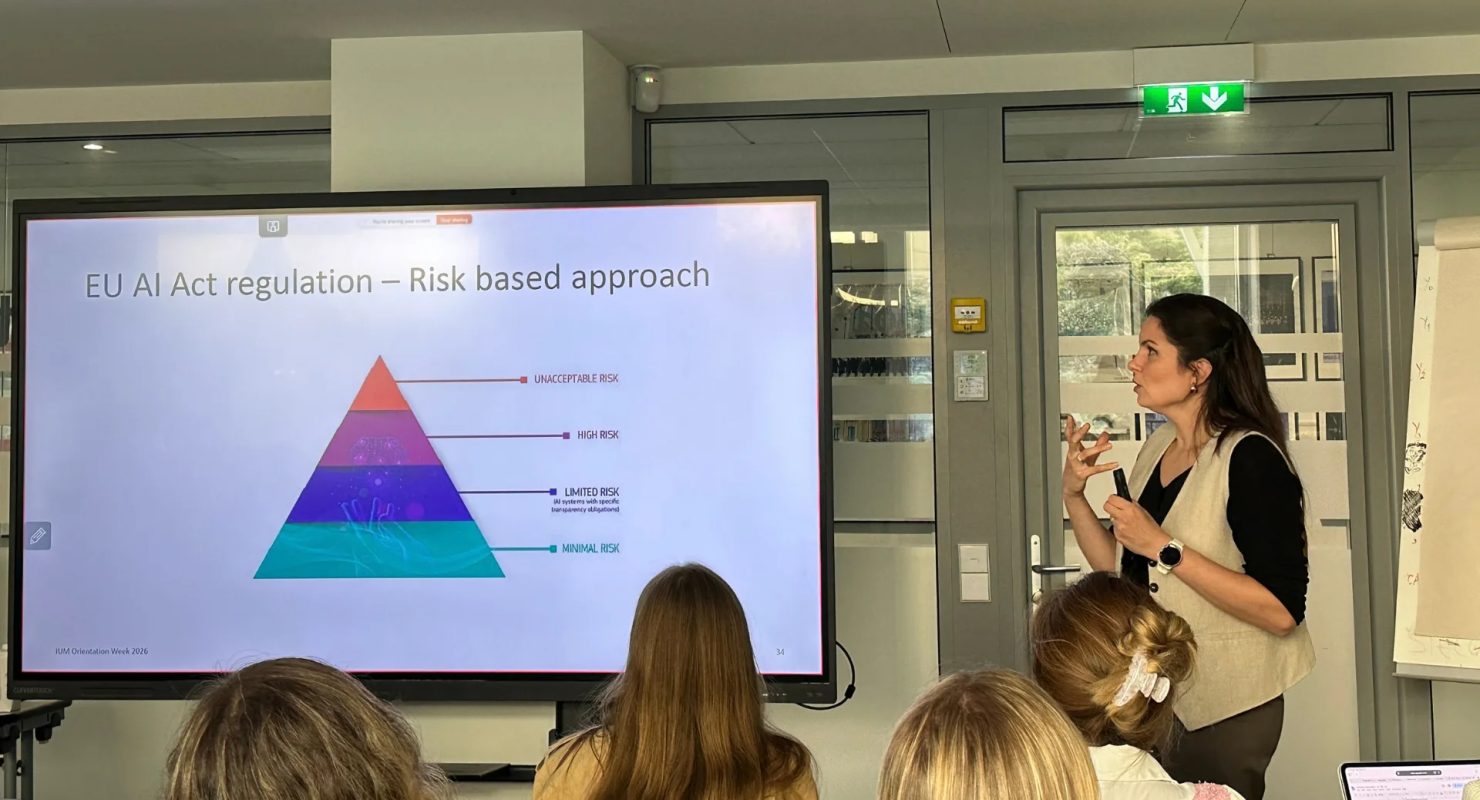
For businesses, Andriotto highlighted four major areas in which AI is transforming organisations: AI-driven decision-making, autonomous operations, predictive experiences and accelerated innovation.
The opportunities, however, come with important questions about the role of human intelligence. If technology increasingly performs tasks that previously required human analysis, there is a risk that excessive reliance on automated systems could weaken the very critical-thinking abilities that organisations still need.
The discussion therefore introduced a more defensive approach to AI, centred on prudence, comprehension and selective delegation. The objective is not to reject AI, but to understand what it can do and use it strategically: repetitive or time-consuming tasks can be delegated to machines, while critical thinking, judgement and strategic decisions should remain firmly under human control.
The regulatory dimension was also part of the conversation, highlighting how governments and institutions around the world are approaching the challenge of governing a technology that is developing faster than many existing regulatory frameworks.
Turning Innovation into Strategy
The lecture concluded by moving from discussion to application through an MBA Strategy Exercise.
Students were invited to consider how innovation could transform their own sectors and, more specifically, to imagine the vision of innovation they would like to achieve by 2035. Working through this challenge required them to move beyond identifying emerging technologies and think instead about how innovation could be implemented strategically within a specific business environment.
This final exercise reflected a central principle of the IUM MBA experience: learning does not stop with understanding a concept. Students are encouraged to question how ideas can be translated into decisions, strategies and practical solutions.
By bringing together private wealth, investment, technology, artificial intelligence and regulation, Silvia Andriotto Melia’s guest lecture offered MBA candidates a multidimensional view of Monaco’s innovation ecosystem. It also reflected the value of the MBA Residential Week at IUM, where students can engage with professionals from different fields and put new perspectives into practice through discussion and strategic exercises.
For more information about our MBA program, check our website
If you have any questions, contact the admissions team at admissions@monaco.edu
Last update on