


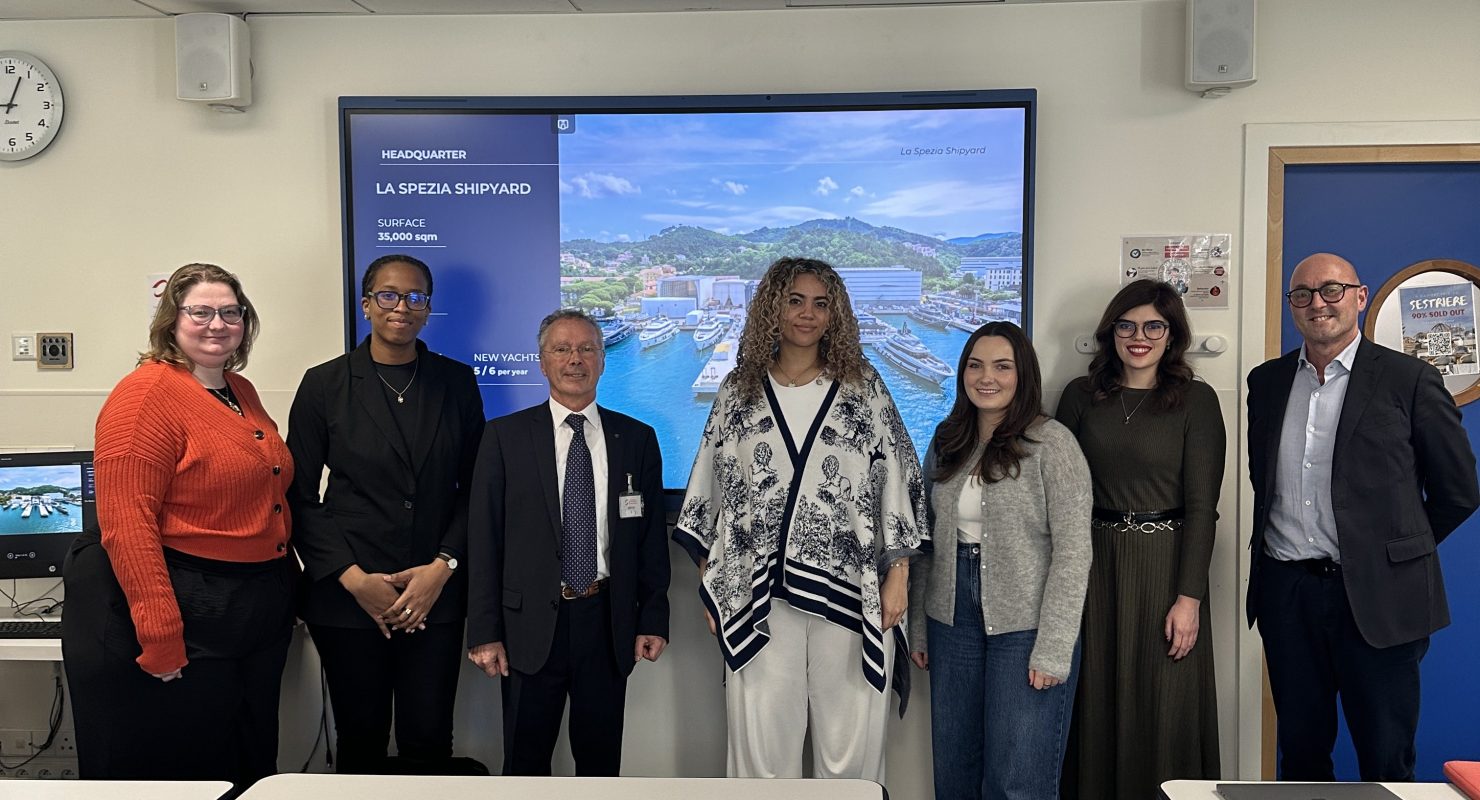
The International University of Monaco recently hosted an insightful guest lecture that bridged the gap between century-old tradition and the cutting edge of environmental technology. Organized by Filippo Ceragioli, the event was led by Guido Penco, Baglietto’s Director of Technical Development.
Addressing students from the MSc in International Management and the MSc in Luxury Management (Yachting Specialization), Penco provided a high-level masterclass on how a heritage shipyard is pivoting to meet the demands of a rapidly changing world.
A Legacy of Speed Meets the Green Revolution
For over 170 years, Baglietto has been synonymous with “Made in Italy” excellence, once defined by ultra-lightweight designs and record-breaking speeds.
However, as Guido Penco explained, the brand’s identity is currently undergoing a profound strategic shift: the transition from pure combustion performance to sustainable innovation.
Penco guided the students through the complexities of this evolution, emphasizing that for a brand with such deep history, innovation must be a balance of rigorous engineering and the preservation of the shipyard’s signature soul. Under his technical leadership, Baglietto is moving toward a future where performance is measured not just in knots, but in energy efficiency and environmental respect.
Hydrogen: The Zero-Emission Frontier
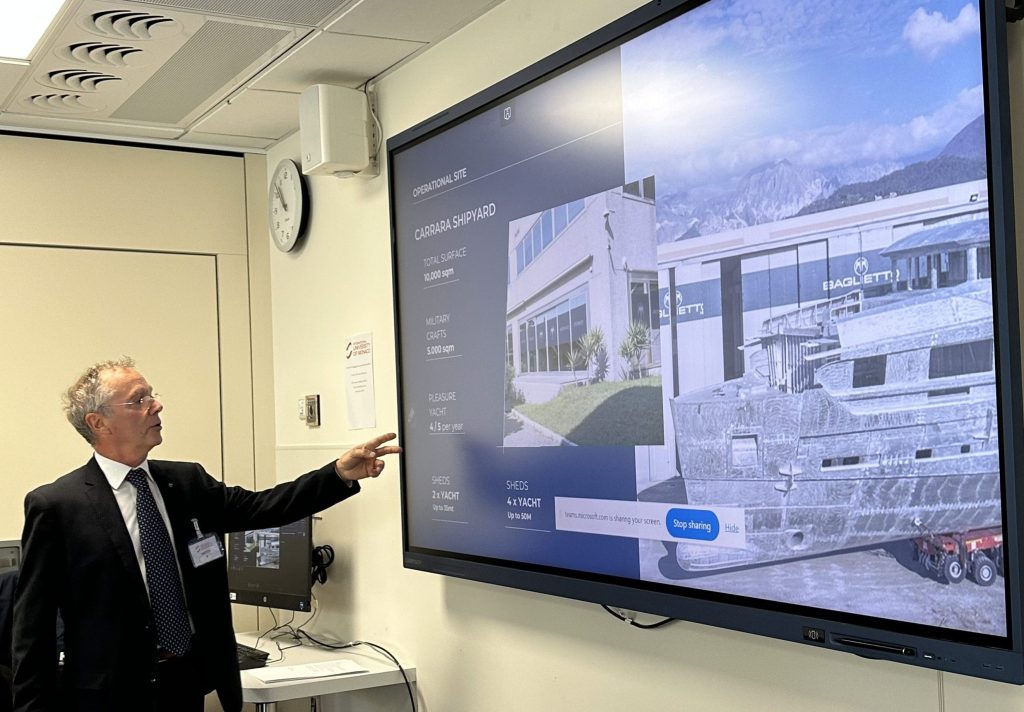
The heart of the discussion focused on Baglietto’s bold Bzero project, a pioneering hydrogen power station developed directly at the shipyard. Penco explained why hydrogen is the “holy grail” of clean energy: it offers the highest energy density and incredibly high efficiency.
By using an electrolyzer to produce hydrogen and fuel cells to generate power, Baglietto is creating yachts that offer total silence and zero CO2 emissions. Unlike standard lithium batteries, which face strict safety hurdles and shorter lifespans, these hydrogen systems are designed to last over 15 years, setting a new benchmark for maritime sustainability.
The Invisible Art of Sustainable Design
One of the most captivating insights Penco shared was the “invisible” challenge of luxury engineering. He noted that, unlike commercial vessels where equipment is often exposed for utility, a superyacht must hide its complex technology (engines, solar panels, and fuel cells) to maintain its sleek, artistic silhouette.
Penco described the unique difficulties of balancing the “physics of the sea,” where designers must master wave resistance and weight distribution while ensuring the technology never compromises the guest experience. In this high-stakes environment, the artistic design must be preserved at all costs; the engineering must be flawless, yet remain entirely out of sight to protect the magic of the luxury environment.
As the session concluded, it was clear that for IUM students, hearing directly from an expert like Guido Penco provided a vital bridge to the professional world. The lecture translated classroom theory into the real-world reality of the luxury yachting ecosystem. Through Baglietto’s vision, students saw that the future of luxury isn’t just about glamour, it is about the innovative precision required to preserve the very oceans the industry calls home.
For more information about our Monaco MBA program, check our website
If you have any questions, contact the admissions team at admissions@monaco.edu
Last update on